Guide on How to Reduce Salt Air Damage for Coastal Assets
Atmospheric marine corrosion presents a relentless threat to structural integrity, mechanical equipment, and residential finishes located near saltwater environments. Airborne sodium chloride particles, high relative humidity, and solar radiation combine to accelerate metal oxidation and material degradation. Traditional maintenance routines fail quickly because they address surface symptoms rather than the root electrochemical reactions. Mitigating maritime decay demands a precise understanding of aerosol transport, alloy vulnerabilities, and protective barrier mechanics.
Engineers, material scientists, and property custodians must collaborate to implement preservation strategies that respect local microclimates. Standard exterior coatings frequently blister and peel under aggressive salt spray loading. Advanced defense mechanisms require sacrificial anodes, marine-grade alloys, and scheduled freshwater washing cycles. Mastering how to reduce salt air damage requires balancing immediate capital expenditure against long-term asset preservation.
Implementing sustainable preservation protocols involves evaluating complex trade-offs across chemical, economic, and logistical domains. Property owners cannot simply apply standard sealants without risking premature delamination when high wind events drive moisture into assembly joints. Comprehensive planning frameworks integrate environmental risk assessments, continuous corrosion monitoring, and adaptive maintenance schedules. This guide examines the material typologies, financial realities, and governance models required for enduring structural longevity.
Understanding “how to reduce salt air damage”
The phrase how to reduce salt air damage represents a core challenge for structural engineers, property managers, and coastal homeowners. Observers often view this discipline as a simple matter of hosing down exterior walls with tap water. This superficial perspective ignores the complex electrochemical mechanisms that govern atmospheric chloride deposition and galvanic corrosion. True mastery requires recognizing that marine air is an active chemical agent rather than a passive environmental feature.
The Oversimplification Trap
Many property owners assume that applying standard commercial paint provides adequate protection against marine corrosion. Standard latex and alkyd paints allow moisture and chloride ions to diffuse through microscopic pores, reaching the underlying metal substrate. Engineers must specify multi-coat high-performance fluoropolymer or epoxy coating systems. Neglecting this multi-tier barrier approach accelerates rust jacking and structural paint failure.
Multi-Perspective Protection Evaluation
Corrosion engineers, industrial painters, and facility managers evaluate mitigation projects through distinct operational lenses. Corrosion engineers study deposition rates, airborne salinity gradients, and metallurgical phase boundaries. Industrial painters calculate surface profile roughness, dry film thickness tolerances, and ambient dew point limits. Facility managers enforce preventive maintenance budgets, wash-down schedules, and warranty compliance audits. Successfully executing how to reduce salt air damage demands reconciling these competing priorities into cohesive preservation strategies.
Deep Contextual Background
Corrosion control evolved from primitive oil-coating techniques into sophisticated metallurgical science and polymer engineering. Early maritime builders relied on heavy tallow greases and sacrificial timber cladding to shield hulls and shore structures. Experience proved that organic compounds degraded rapidly under intense ultraviolet radiation and salt loading. This hard lesson drove the historic shift toward synthetic polymers and corrosion-resistant metal alloys.
Modern manufacturing policies transformed coastal preservation standards dramatically. Following decades of catastrophic infrastructure failures in marine zones, regulatory bodies established mandatory material specifications for coastal construction. Authorities abandoned unchecked carbon steel fasteners within high-hazard salt spray environments. Preservation protocols adapted by integrating marine-grade stainless steels, anodized aluminum extrusions, and fluoropolymer architectural finishes.
Conceptual Frameworks and Mental Models
The Atmospheric Chloride Deposition Model
Coastal parcels experience varying environmental stress based on shoreline distance and breaking wave energy. The deposition model tracks airborne sodium chloride aerosol concentrations as they travel inland. Any proximity increase multiplies the rate of chloride ion accumulation on exposed surfaces. Planners evaluate mitigation options using distance-decay curves to deploy appropriate alloy grades.
The Electrochemical Corrosion Cell Hierarchy
Corrosion requires an anode, a cathode, an electrolyte, and a metallic return path. The electrochemical model categorizes interventions by how they disrupt this destructive circuit. Protective coatings block oxygen and moisture, while sacrificial anodes divert oxidation away from primary structural members. Designers match barrier integrity to local atmospheric aggressiveness.
The Preventive Maintenance Cycle Model
When physical exposure to salt air is unavoidable, structured maintenance cycles provide a reliable defense. This model establishes scheduled intervals for rinsing salt crystals from building envelopes. Regulatory agencies and corporate asset managers implement mandatory washing protocols to prevent salt crust accumulation. Ignoring this paradigm leads to catastrophic equipment failure and premature material replacement.
Key Categories or Variations
Selecting a mitigation method requires comparing preservation strategies against site constraints and environmental impact limits. Different intervention typologies provide distinct operational trade-offs.
Fresh Water Wash-Down Systems
Installing automated or manual freshwater rinsing arrays to dissolve and remove accumulated salt crystals.
-
Advantages: Prevents chloride crystallization, inexpensive daily upkeep, extends coating life.
-
Trade-offs: High water consumption, potential mineral spotting if water is hard, regular pump maintenance.
Sacrificial Anode Cathodic Protection
Attaching zinc or magnesium blocks to vulnerable steel structures to corrode in place of the protected metal.
-
Advantages: Autonomous protection of submerged or highly vulnerable metal components, prevents structural thinning.
-
Trade-offs: Requires periodic anode replacement, ineffective on isolated ungrounded fasteners.
Fluoropolymer and Epoxy Barrier Coatings
Applying high-performance industrial paint systems featuring multi-layer primer, intermediate, and topcoat films.
-
Advantages: Exceptional chemical resistance, excellent ultraviolet stability, smooth self-cleaning surfaces.
-
Trade-offs: Demands meticulous surface profile preparation, high initial material and labor costs.
Marine-Grade Alloy Upgrades
Replacing standard carbon steel and aluminum components with 316 stainless steel or bronze hardware.
-
Advantages: Inherent corrosion resistance, permanent metallurgical upgrade, eliminates rust bleeding.
-
Trade-offs: Substantially higher material purchasing costs, potential galvanic reaction risks if mismatched.
Closed-Loop HVAC Air Filtration
Integrating activated carbon and potassium permanganate media scrubbers into central ventilation systems.
-
Advantages: Protects sensitive indoor electronics and appliances from airborne salt vapor infiltration.
-
Trade-offs: Requires frequent filter media replacement, increases static pressure on blower motors.
Dielectric Isolation Gaskets
Placing non-conductive polymer washers and sleeves between dissimilar metals to stop galvanic currents.
-
Advantages: Stops bimetallic corrosion at connection points completely, low unit cost.
-
Trade-offs: Prone to compression set over time, requires careful torque control during installation.
Decision Logic for Category Selection
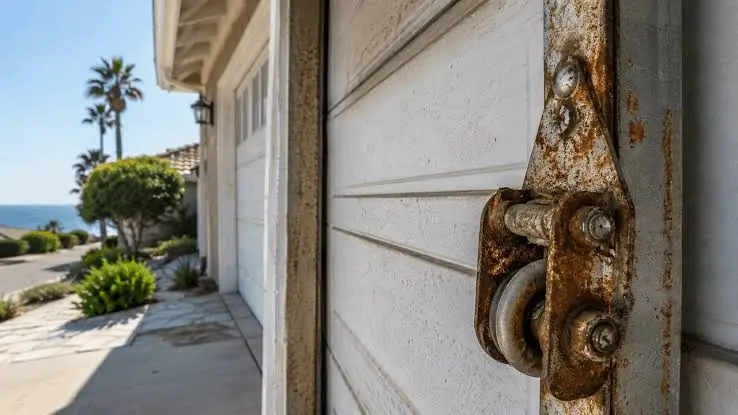
Choosing a specific preservation archetype begins with local atmospheric corrosivity mapping and asset exposure audits. High-energy oceanfront structures require robust fluoropolymer coatings combined with 316 stainless steel fasteners. Calmed estuarine facilities permit lighter maintenance cycles and standard protective primers. Budget boundaries then narrow choices between capital-intensive alloy replacements and recurring wash programs.
Detailed Real-World Scenarios
Scenario One: Oceanfront Balcony Railing Degradation
An oceanfront high-rise residential building experiences severe rust bleeding and structural pitting on exterior aluminum railings.
-
Constraints: High wind exposure, constant salt spray loading, stringent building occupant safety codes.
-
Decision Points: Stripping existing failed coatings down to bare metal; applying a multi-tier epoxy primer and fluoropolymer topcoat system.
-
Failure Modes: Inadequate surface profile preparation causes the new coating system to delaminate within the first winter storm season.
-
Second-Order Effects: Properly coated railings eliminate annual spot-rust repairs and preserve long-term aesthetic valuation.
Scenario Two: Coastal HVAC Compressor Unit Failure
A commercial beachside resort suffers recurring condenser coil burnout and electrical relay failures due to internal salt accumulation.
-
Constraints: Continuous cooling demand, high relative humidity, aggressive maritime microclimate.
-
Decision Points: Replacing standard aluminum coil fins with electro-coated copper coils; installing pre-filter intake mesh.
-
Failure Modes: Neglecting annual freshwater coil rinsing allows salt crust to bridge electrical terminals, causing short circuits.
-
Second-Order Effects: Enhanced coil protection extends mechanical equipment lifecycles and slashes emergency repair expenditures.
Scenario Three: Coastal Residential Window Hardware Seizure
A luxury beach house experiences complete locking mechanism failure on casement windows due to internal salt crystallization.
-
Constraints: Tight tolerance mechanical assemblies, hidden internal linkages, aesthetic wood framing integration.
-
Decision Points: Upgrading all internal linkage pins to marine-grade bronze; implementing a scheduled silicone-based lubrication routine.
-
Failure Modes: Using petroleum-based lubricants that trap airborne salt dust accelerates mechanical wear and jamming.
-
Second-Order Effects: Correct alloy selection ensures smooth multi-year window operation without premature hardware replacement.
Scenario Four: Marina Infrastructure Fastener Rust Jacking
A timber pier supporting a commercial marina suffers rapid structural loosening as carbon steel bolts oxidize and split the wood.
-
Constraints: Subtidal moisture exposure, high dynamic wave loads, continuous traffic weight.
-
Decision Points: Extracting oxidized bolts; replacing all structural hardware with hot-dip galvanized and 316 stainless steel fasteners.
-
Failure Modes: Mixing stainless steel bolts with standard steel plates without dielectric isolation accelerates galvanic decay.
-
Second-Order Effects: Secured structural connections restore load-bearing safety margins and extend facility operational lifespans.
Planning, Cost, and Resource Dynamics
Executing effective corrosion control projects demands granular financial planning. Direct expenditures encompass specialized marine-grade alloys, industrial coating materials, abrasive blasting equipment, and certified trade labor. Indirect expenses involve environmental containment permits, scaffolding setup, waste disposal fees, and long-term inspection programs.
Opportunity costs manifest through critical resource compromises. Allocating facility capital toward exterior coating renewals reduces funds available for interior finish upgrades. Similarly, investing in premium stainless steel fasteners locks an owner into higher upfront material budgets while eliminating recurring replacement cycles.
Tools, Strategies, and Support Systems
Executing successful corrosion mitigation requires specialized technical instruments, testing software suites, and professional contractor networks.
-
Dry film thickness magnetic gauges verify uniform coating application across structural steel surfaces.
-
Surface profile depth micrometer instruments measure anchor pattern roughness prior to painting.
-
Bresle patch chloride test kits measure residual surface salt contamination levels on steel substrates.
-
Environmental dew point meters monitor relative humidity and metal temperature during coating application.
-
Ultrasonic metal thickness gauges evaluate internal wall thinning caused by hidden corrosion cells.
-
Infrared thermal cameras identify electrical resistance heating caused by salt-corroded terminal connections.
-
Pinhole holiday detectors locate microscopic voids in protective industrial coating films.
-
GIS atmospheric corrosivity mapping platforms track regional salt deposition rates across coastal territories.
Risk Landscape and Failure Modes
Corrosion control projects compound rapidly when individual protective systems fail sequentially. A compromised coating pinhole allows moisture and salt to enter, which initiates rust jacking beneath the film, ultimately delaminating large sheets of protective paint. Managing these hazards requires identifying primary vulnerability points across the entire asset life cycle.
Governance, Maintenance, and Long-Term Adaptation
Preserving coastal assets demands rigorous adherence to scheduled inspection routines. Property custodians must monitor protective coating integrity for hairline cracking or blistering caused by solar radiation and salt loading. Exterior metal surfaces require periodic freshwater washing to remove chloride deposits that initiate pitting corrosion.
Layered Maintenance Checklist
-
Semi-Annual: Flush HVAC condenser coils with fresh water; inspect window hardware lubrication.
-
Annual: Conduct dry film thickness coating audits; test sacrificial anode depletion levels.
-
Post-Storm: Survey exterior surfaces for wind-driven salt crust; verify dielectric seal integrity.
Measurement, Tracking, and Evaluation
Evaluating long-term project performance involves monitoring both leading and lagging indicators. Leading metrics include residual surface chloride test values, coating adhesion pull-off test results, and environmental humidity logs. Lagging metrics encompass rust spot counts, repair expenditure frequencies, and asset valuation retention indices over time.
Documentation serves as the backbone of asset management. Custodians should maintain secure digital archives containing coating batch certificates, engineering calculations, maintenance logs, and material warranty records. This repository streamlines future restoration projects and satisfies insurance underwriting audits.
Common Misconceptions and Oversimplifications
-
Myth: Rinsing exterior walls with rainwater removes accumulated salt deposits.
-
Correction: Rainwater often contains dissolved atmospheric pollutants and insufficient volume to dissolve heavy salt crusts completely.
-
-
Myth: Any stainless steel fastener works reliably in marine environments.
-
Correction: Lower grades like 304 stainless steel pit rapidly in salt air; marine applications demand 316 alloy specifications.
-
-
Myth: Painting over minor surface rust stops corrosion permanently.
-
Correction: Trapped rust beneath paint films continues to oxidize, expanding and lifting the coating within months.
-
-
Myth: Standard household sealants protect outdoor electrical junctions from salt vapor.
-
Correction: Marine moisture and salt ions penetrate standard silicone, requiring gel-filled weatherproof enclosures.
-
-
Myth: Aluminum components are immune to salt air degradation.
-
Correction: Unprotected aluminum pits, chalks, and corrodes rapidly unless properly anodized or fluoropolymer coated.
-
-
Myth: Indoor spaces are completely safe from salt air damage.
-
Correction: Unfiltered coastal ventilation brings salt vapor indoors, corroding indoor electronics and appliance coils.
-
Contextual Considerations and Conclusion
Reducing salt air damage demands deep respect for material science, rigorous surface preparation, and uncompromising maintenance discipline. Preservation strategies must transcend short-term cosmetic fixes to prioritize metallurgical compatibility, barrier integrity, and scheduled cleaning. By approaching coastal asset protection through an analytical framework, property owners establish lasting structural resilience against harsh marine environments.