Premium Analysis: Luxury Beach Houses USA
Coastal real estate markets across the United States represent a complex intersection of immense wealth concentration, fragile marine geography, and strict municipal governance. High-end shoreline residential architecture requires a delicate balance between elite aesthetic refinement and aggressive storm resilience engineering. Property purchasers evaluating high-value assets along the Atlantic, Pacific, and Gulf littorals must look past surface luxury to examine foundational structural integrity, local zoning restrictions, and long-term climate risk exposure.
Acquiring and developing premier coastal assets demands a deep understanding of how distinct oceanographic environments dictate residential form and function. Atlantic barrier islands contend with shifting sands and frequent hurricane storm tracks, whereas Pacific coastlines face steep seismic fault lines and high-energy wave action. Architectural responses vary from heavily anchored concrete pilings to cantilevered steel-frame structures designed to withstand extreme environmental forces. This analysis explores the architectural typologies, valuation drivers, and structural frameworks defining exceptional coastal real estate across the country.
Evaluating high-value waterfront residences involves assessing complex trade-offs across ecological resilience, municipal regulation, and long-term capital preservation. Buyers cannot simply purchase an elite shoreline asset without accounting for escalating insurance premiums, flood zone compliance mandates, and intensive maintenance cycles. Comprehensive planning frameworks integrate risk assessments, structural evaluations, and regional zoning audits. This guide details the geographical categories, economic realities, and governance models required for enduring ownership of luxury beach houses usa.
Understanding “luxury beach houses usa”
The phrase luxury beach houses usa appears frequently in high-end real estate publications and architectural digests. Observers often view these dwellings as sprawling coastal estates featuring endless glass walls and private sandy access. This superficial perspective ignores the rigorous structural engineering and environmental zoning constraints required to maintain habitability in high-hazard marine zones. True distinction relies on foundation resilience, spatial zoning, and integration with the surrounding coastal ecosystem.
The Oversimplification Trap
Many prospective buyers assume that architectural prestige correlates directly with proximity to the high-tide line. Properties situated directly on dynamic shorelines face severe erosion threats, rising insurance costs, and frequent storm damage. Engineers must evaluate whether a parcel sits within a protected estuarine bay or an open-ocean velocity zone. Neglecting these geographical distinctions transforms a premier investment into a severe financial liability.
Multi-Perspective Property Evaluation
Architects, coastal geomorphologists, and real estate appraisers evaluate elite shoreline properties through distinct operational lenses. Architects prioritize spatial flow, natural light diffusion, and indoor-outdoor living transitions. Geomorphologists study littoral drift, dune stability, and multi-decadal shoreline recession rates. Appraisers analyze comparable sales, land scarcity factors, and municipal zoning density limits. Successfully identifying the characteristics of luxury beach houses usa demands reconciling these competing perspectives into cohesive asset evaluations.
Deep Contextual Background
American coastal residential architecture evolved from utilitarian fishing shacks into sophisticated compounds of wealth and design. Early shoreline builders relied on simple timber framing and minimal room zoning to survive seasonal storms. Experience proved that unchecked coastal development accelerated beach erosion and exposed occupants to catastrophic hurricane surges. This hard lesson drove the historic establishment of federal flood insurance maps and strict coastal zoning laws.
Modern real estate markets transformed shoreline property standards dramatically following decades of coastal population growth. Buyers abandoned casual building practices in favor of engineered resilience and sustainable land use planning. Municipal authorities established mandatory setback lines and environmental impact review boards. Property design adapted by integrating deep-driven concrete pilings, impact-rated fenestration systems, and elevated living envelopes designed to withstand major climate events.
Conceptual Frameworks and Mental Models
The Environmental Exposure Hierarchy
Coastal regions present varying degrees of environmental stress based on wave energy and wind velocity. The exposure framework categorizes properties by their proximity to high-hazard velocity zones and corrosive salt air. Any increase in wave energy multiplies structural loading requirements and material degradation rates. Planners evaluate property sustainability using regional climate risk indices.
The Scarcity and Land Value Model
Shoreline land is a finite resource governed by strict environmental regulations and physical boundaries. The scarcity model tracks how limited parcel availability drives long-term asset appreciation despite physical risks. Properties with uncompromised ocean views and private beach access command substantial market premiums. Investors balance initial capital outlay against future regulatory restrictions on new coastal development.
The Structural Redundancy Model
Exceptional coastal buildings incorporate multiple layers of structural defense against natural disasters. This model evaluates how independent load paths, breakaway lower walls, and continuous tie-down rods prevent catastrophic failure. When one protective barrier suffers damage, secondary systems maintain overall structural integrity. Designers prioritize redundancy over cosmetic extravagance in high-risk zones.
Key Categories or Variations
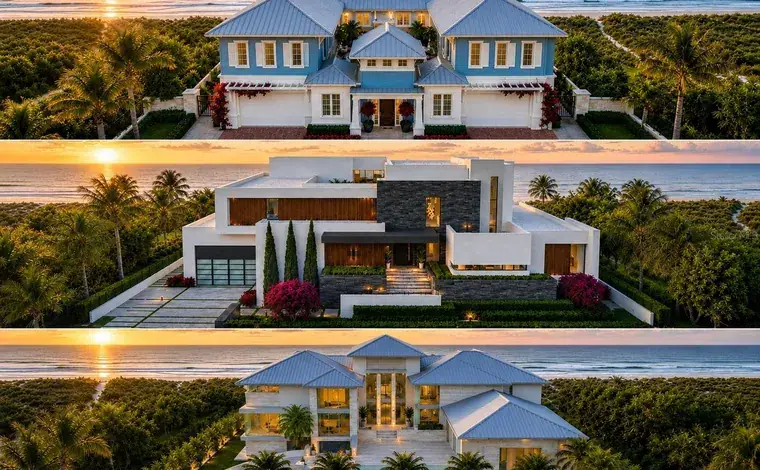
Selecting a coastal property requires comparing architectural typologies against regional geography, climate risks, and lifestyle requirements. Different structural designs provide distinct operational trade-offs.
Atlantic Barrier Island Estate
Spacious multi-story homes situated on flat, sandy barrier islands along the Eastern Seaboard.
-
Advantages: Direct ocean-to-sound views, extensive sandy beach frontage, strong rental demand.
-
Trade-offs: High vulnerability to hurricane storm surges, expensive windstorm insurance policies.
Pacific Northwest Rocky Bluff Modernist
Architectural glass and steel structures cantilevered over dramatic rocky cliffs overlooking the Pacific Ocean.
-
Advantages: Breathtaking panoramic views, minimal exposure to low-lying flood surges.
-
Trade-offs: Extreme wind loads, challenging foundation anchoring into sheer rock faces, seismic activity risks.
Gulf Coast Stilt Compound
Elevated coastal residences supported by heavy timber or concrete pilings designed to clear storm floodwaters.
-
Advantages: Excellent clearance for high storm surges, shaded outdoor living space underneath.
-
Trade-offs: High humidity decay rates, heavy exposure to tropical storm wind-driven rain.
New England Shingle-Style Sanctuary
Traditional timber-framed homes clad in weathered cedar shingles, situated along rocky New England coves.
-
Advantages: Timeless architectural aesthetic, excellent resistance to nor’easter wind pressures.
-
Trade-offs: High exterior maintenance requirements, limited open-plan interior configurations.
Southern California Modern Beachfront
Seamless indoor-outdoor compounds featuring expansive glass sliding walls opening directly onto sandy shores.
-
Advantages: Perfect climate year-round, luxurious modern amenities, high lifestyle valuation.
-
Trade-offs: High property acquisition costs, strict coastal commission environmental oversight.
Tropical Florida Keys Key West Style
Historic or reproduction metal-roofed structures featuring wide wrap-around verandas and louvered shutters.
-
Advantages: Exceptional passive cooling design, highly resistant to sub-tropical sun and rain.
-
Trade-offs: Strict historic district aesthetic rules, vulnerable to direct hurricane landfalls.
Decision Logic for Category Selection
Choosing a specific coastal property category begins with regional climate risk assessment and lifestyle preferences. Buyers seeking warm year-round swimming favor Southern California or Florida Gulf locations. Those prioritizing dramatic natural scenery and cooler summers lean toward Pacific Northwest or New England coastal enclaves. Budget boundaries and insurance availability then narrow choices between custom architectural compounds and established regional styles.
Detailed Real-World Scenarios
Scenario One: Acquiring an Oceanfront Estate on Outer Banks
A luxury buyer evaluates a multi-million-dollar property located on a dynamic North Carolina barrier island spit.
-
Constraints: Rapid shoreline recession, high hurricane frequency, limited evacuation bridge capacity.
-
Decision Points: Reviewing historical erosion survey maps; purchasing properties equipped with deep-driven concrete pilings.
-
Failure Modes: Failing to check local beach nourishment schedules leaves the parcel vulnerable to unexpected land loss.
-
Second-Order Effects: Proper due diligence ensures long-term asset viability and protects the investment against sudden storm erosion.
Scenario Two: Developing a Modern Bluff Home in Big Sur
An investor plans a contemporary glass residence perched on a steep coastal cliff above the Pacific Ocean.
-
Constraints: Strict California Coastal Commission environmental rules, seismic fault proximity, steep slope access.
-
Decision Points: Employing micro-pile drilling techniques to anchor foundations into stable bedrock without mass grading.
-
Failure Modes: Lengthy regulatory permit delays inflate holding costs before foundation construction even begins.
-
Second-Order Effects: Adhering to strict environmental mandates protects the natural landscape while securing long-term property rights.
Scenario Three: Restoring a Historic Maine Shingle-Style Cottage
A family acquires an aging coastal property situated on a rocky Maine peninsula exposed to winter nor’easters.
-
Constraints: Severe salt spray corrosion, rotting cedar siding, rigid local historic preservation guidelines.
-
Decision Points: Replacing standard fasteners with 316 marine-grade stainless steel; retaining historic shingle profiles.
-
Failure Modes: Using non-compatible iron nails causes black tannin stains to bleed through the new cedar shingles.
-
Second-Order Effects: Correct material selection restores structural longevity while preserving authentic regional architectural character.
Scenario Four: Upgrading a Florida Keys Waterfront Compound
A property owner upgrades an existing ground-level home in the Florida Keys to improve storm surge resilience.
-
Constraints: High base flood elevation mandates, aggressive sub-tropical sun, strict windborne debris codes.
-
Decision Points: Installing impact-rated laminated glass windows; adding spray foam insulation to seal out humid marine air.
-
Failure Modes: Neglecting to upgrade lower utility lines allows floodwaters to short-circuit electrical systems during storm events.
-
Second-Order Effects: Comprehensive structural hardening reduces annual windstorm insurance premiums significantly.
Planning, Cost, and Resource Dynamics
Acquiring and maintaining premier coastal real estate demands granular financial planning. Direct expenditures encompass land purchase prices, marine engineering fees, premium construction materials, and specialized trade labor. Indirect expenses involve property taxes, windstorm insurance policies, environmental permit fees, and long-term erosion mitigation reserves.
Opportunity costs manifest through critical location and design compromises. Allocating capital toward prime open-ocean frontage increases structural risk and insurance overhead compared to sheltered bayfront parcels. Similarly, investing in expansive glass walls increases heating and cooling energy consumption across seasonal weather shifts.
Tools, Strategies, and Support Systems
Evaluating and managing elite coastal properties requires specialized technical instruments, mapping software, and professional networks.
-
FEMA flood map insurance rate portals evaluate precise property inundation risks and base flood elevations.
-
GIS spatial mapping software tracks multi-decadal shoreline recession rates and historical erosion trends.
-
Geotechnical soil testing rigs verify bearing capacity for deep foundation piling installations.
-
Marine contractor directories provide vetted local specialists for specialized structural repairs.
-
Real estate valuation analytics platforms compare coastal price-per-square-foot trends across regional markets.
-
Wind tunnel engineering simulation software models structural response to hurricane-force wind loads.
-
Automated coastal weather telemetry stations monitor local wave heights and storm surge warnings.
-
Environmental legal advisory networks navigate complex state and federal coastal commission regulations.
Risk Landscape and Failure Modes
Coastal real estate investments compound rapidly when individual environmental or structural hazards fail sequentially. A compromised roof shingle lets in wind-driven rain, which saturates interior framing and invites wood-boring insects, ultimately destabilizing the upper wall assembly. Managing these risks requires identifying primary vulnerability points across the entire property life cycle.
Governance, Maintenance, and Long-Term Adaptation
Preserving elite coastal properties demands rigorous adherence to scheduled inspection routines. Property custodians must monitor structural framing connections for early signs of moisture intrusion and galvanic corrosion. Exterior surfaces require periodic freshwater washing to remove salt crystals that accelerate paint peeling and metal pitting.
Layered Maintenance Checklist
-
Semi-Annual: Flush HVAC condenser coils with fresh water; inspect window and door caulking seals.
-
Annual: Check structural foundation pile connections for corrosion; test sump pump operations.
-
Post-Storm: Survey roof shingle and metal panel integrity; verify exterior siding fastener tightness.
Measurement, Tracking, and Evaluation
Evaluating long-term asset performance involves monitoring both leading and lagging indicators. Leading metrics include shoreline survey measurements, annual insurance premium adjustments, and structural engineering inspection logs. Lagging metrics encompass property resale appreciation rates, capital improvement expenditure totals, and maintenance cost histories over time.
Documentation serves as the backbone of coastal asset management. Owners should maintain secure digital archives containing geotechnical reports, architectural blueprints, insurance policies, and maintenance logs. This repository streamlines property tax assessments, simplifies future refinancing applications, and satisfies underwriting audits.
Common Misconceptions and Oversimplifications
-
Myth: Owning a beach house guarantees a steady, trouble-free passive rental income stream.
-
Correction: High maintenance costs, seasonal vacancy swings, and severe weather damage frequently erode rental profitability.
-
-
Myth: Standard homeowners insurance policies cover all damage caused by coastal hurricanes.
-
Correction: Standard policies exclude flood and storm surge damage; owners must purchase separate federal flood policies.
-
-
Myth: Properties located on rocky cliffs face zero risk from coastal water damage.
-
Correction: While immune to storm surges, rocky cliffs face severe wave runup, high winds, and geological slope erosion.
-
-
Myth: Purchasing property behind a natural dune provides absolute protection against storms.
-
Correction: Major hurricanes can breach dunes entirely, exposing inland homes to direct high-velocity wave action.
-
-
Myth: Standard residential building materials perform adequately near saltwater environments.
-
Correction: Salt air corrodes standard steel and aluminum rapidly; marine properties demand specialized stainless alloys.
-
-
Myth: Coastal erosion is a slow, predictable process that rarely threatens real estate.
-
Correction: Major storm events can erode dozens of feet of shoreline overnight, destroying unprotected foundations instantly.
-
Contextual Considerations and Conclusion
Evaluating elite coastal properties demands deep respect for environmental dynamics, rigorous engineering standards, and disciplined financial planning. Property selection must transcend surface aesthetics to prioritize foundation resilience, regulatory compliance, and long-term structural adaptability. By approaching coastal real estate ownership through an analytical framework, buyers establish lasting asset value and secure refuges along the nation’s diverse shorelines.